The goal of our Society for Conservation Biology (SCB) Europe Section Blog is to share stories and relevant information about activities going on within our section and more broadly in the conservation community. Stories and articles shared on our blog should not be taken as an official position or statement of SCB or SCB Europe Section. Thank you for reading!
Showing posts with label wood pastures - thematic posts. Show all posts

Monday, 18 February 2013

Looking to the past for the future – an environmental historian perspective


As an environmental historian who has researched both the environmental history of the Middle Ages and contemporary ecological restoration, I brought these two interests together in a study of medieval wood pasture regimes and its implications for modern restoration (Jørgensen 2013). The study examines pig husbandry in English wood pastures from about 1000 to 1500 AD.  A wide-range of data sources, including financial records, agricultural treatises, legal writs, and artistic illustrations, are brought together to discuss medieval swine rearing practices.

I address both the feeding of swine on autumn acorns, which is a well-attested practice, and the lesser discussed but still widely practiced grazing of swine in pastures. Because both feeding on grasses/rhizomatic plants and fattening on acorns were required at different times of the year, wood pastures were likely regular swine feeding grounds during medieval times.

Illustration of medieval swine herding practices in an English manuscript from the 14th century. British Library, Yates Thompson 13. Image in the public domain. Courtesy of British Library’s Catalogue of Illuminated Manuscripts.

Through a comparison with the Spanish dehesa wood pasture system (Parsons 1962, Joffre et al 1988, Clement 2008), I argue that these English wood pastures were likely dominated by oak trees pollarded on long cycles. In addition, selective planting and seedling cultivation during the Middle Ages would have favored pedunculate oak, which provided acorns that were easier to knock off of the tree for use as fodder. Therefore, I conclude that wood pasture restoration projects in the UK might want to encourage pollarded pedunculate oaks as the pasture dominant species.

Although English wood pasture restoration has focused on the use of cattle and ponies as grazers (see the Grazing Animals Project for examples), swine should be considered a viable wood pasture restoration component. Pigs have a different affect on vegetation than the large herbivores: pigs are omnivorous foragers that obtain much of their food by rooting as well as grazing on herbs, whereas cattle and ponies are bulk grazers.  For those interested in wood pasture restoration, pigs may help control weedy plants like bracken, loosen the soil bed, and maintain the open character of wood pastures.

References
Clement, V. 2008. Spanish wood pasture: origin and durability of an historical wooded landscape in Mediterranean Europe. Environmental History 14: 67–87.

Joffre, R., J. Vacher, C. de los Llanos, and G. Long. 1988. The dehesa: an agrosilvopastoral system of the Mediterranean region with special reference to the Sierra Morena area of Spain. Agroforestry Systems 6: 71–96.

Jørgensen, D. 2013. Pigs and pollards: medieval insights for UK wood pasture restoration. Sustainability 5: 387-399. http://www.mdpi.com/2071-1050/5/2/387

Parsons, J.J. 1962. The acorn-hog economy of the oak woodlands of southwestern Spain. Geographical Review 52: 211–235.

Correspondence
Dolly Jørgensen, PhD
Department of Ecology and Environmental Science
Umeå University, Sweden

Wednesday, 28 November 2012

Long-term vegetation dynamics in wood-pastures simulated with WoodPaM


Wood-pastures are inherently dynamic systems consisting of a mosaic of patches of forest, grassland and interconnecting successional stages of shrub land (see e.g. Vojta in this blog). Grazing and browsing of livestock negatively impacts tree regeneration and counteracts the natural successional trend towards forest development (in a Middle European context). The balance of these processes, and therefore the landscape mosaic, however, is very sensitive to external influences, such as forest management and climate change. Both directly impact the recruitment and growth of tree species, as well as the spatial configuration of grassland and forest patches, which feedbacks to successional dynamics and grazing behavior of free ranging livestock. Such feedback mechanisms complicate predictions of the effect of management decisions. Moreover, the long-term dynamics at landscape level due to the slow establishment and growth of trees temporarily decouple management actions from the long-term system’s response.

In order to cope with this problem of spatio-temporal complexity in wood-pasture management, a simulation model of wood-pasture ecosystems WoodPaM was developed, which primarily aimed on a strategic investigation of the dynamics and feedback mechanisms in wood-pastures in the Swiss Jura Mountains (Figure 1, Gillet et al. 2002, Gillet 2008, see Buttler et al. in this blog). Recent model refinements now allow a more tactical application to investigate the potential fate of wood-pastures in the light of climate and land-use changes.


Figure 1. Structure of the WoodPaM-model and main interactions (arrows) among submodels (in horizontal direction) and across spatial scales (in vertical direction). Successions in the herb, the shrub and the tree submodels are driven by grazing impacts and climate. Grazing intensity at the grid cell level is determined by selective habitat use of cattle at the landscape level. Local successions in turn feed back to landscape level by the formation of spatio-temporal patterns of forage availability and landscape structures. Figure 1 is modified after a manuscript by Peringer et al. currently in review in Ecology and Society.
In a case study (details in Gillet & Peringer 2012) we simulated the vegetation dynamics (grassland succession, tree establishment, growth and decay) in the wood-pasture La Bullatonne Dessous, which is situated in the Jura Vaudois at high elevation from 1225 to 1480 m a.s.l. (Coordinates 46.856083 / 6.564403), for two climate change scenarios in combination with three scenarios of forest management. The climate change scenarios pinpoint two extreme possible futures of our world, a fuel-intensive future with drastic warming (IPCC-SRES 2000 A1FI, +6 K from 2000 to 2100) and a moderate development with less warming (IPCC-SRES 2000 B2, +4 K from 2000 to 2100). Forest management strategies consider: (i) no management (NM); (ii) assisted migration (AM), assuming an increased immigration of 20 seedlings of each tree species in each grid cell per year during the warming period 2001-2100; (iii) forest management (FM), assuming logging every 20 years of 25% of the trees in randomly selected cells that contain at least 20 trees of the same species. The six resulting simulation experiments explore the options to adapt management practices to different degrees of climate warming and are subsequently named B2-NM, B2-AM, B2-FM, A1FI-NM, A1FI-AM and A1FI-FM. Simulations are prolonged until calendar year 3000 to investigate long-term successional trends from hypothetical equilibrium patterns that are triggered by today’s management decisions under upcoming climatic conditions.

The simulations show that climate-change impacts are delayed for decades and centuries after warming started in calendar year 2001, and that future landscape dynamics and structures strongly depend on the degree of warming (Figures 2 and 3). After minor changes until 2050, divergent succession lines lead to progressive forest succession following moderate warming (B2-NM), while extreme warming temporarily triggers regressive succession (A1FI-NM, Figure 2 a,b). This is explained by the drought-induced collapse of currently dominant Norway spruce (Picea abies) and its slow replacement by beech (Fagus sylvatica) or by Scots pine (Pinus sylvestris) dependent on the degree of warming. In the long run, dominance of beech triggers a segregation of open grassland and closed forest, while dominance of pine leads to a homogenous landscape consisting of densely wooded pastures (Figure 3). Assisted migration of tree species in our AM scenarios does not change the final configuration of the landscape but reduces the time required for species replacement, thus preventing the breakdown of current spruce forests (Figure 2 c,d). Logging turned out to homogenize the landscape, if dominated by beech in the moderate climate change scenario (B2-FM, Figure 3) through the prevention of the development of any grazed forests or unwooded pastures (Figure 2 e). While in the moderate climate change scenario (B2-FM) a stable state developed after centuries (2600), in the pine dominated landscape of the extreme warming scenario (A1FI-FM), logging triggered shifting-mosaic dynamics (Figure 2 f). Here, landscape complexity was subsequently enhanced  (Figure 3). 

Figure 2. Landscape dynamics in the wood-pasture „La Bullatonne“ following a combination of two climate change scenarios (moderate B2 and extreme A1FI in columns) and three forest management scenarios (no management a and b, assisted migration c and d, patchwise clearing e and f in rows). Landscape structure is displayed in terms of the cover of four phytocoenosis-types inside the pasture, which are mainly defined by tree cover: unwooded pastures with tree cover below 1%; sparsely wooded pastures with tree cover between 1% and 20%, trees and shrubs being mostly scattered; densely wooded pastures with tree cover within the range 20-70% and a coarse-grained structure; grazed forests with treecover higher than 70% and small clearings included in a forest matrix. This figure is from Gillet & Peringer (2012).


Figure 3. Time series of the landscape aggregation index (He et al. 2000) following two scenarios of climate change (B2 left and A1FI right) and three strategies of forest management. A higher landscape aggregation index means a more homogenous landscape. Figure corresponds to Figure 3 in Gillet & Peringer (2012).

We conclude that in contrast of historical studies, which show a somewhat resilience of the wood-pastures of the Jura to past climate variability (Sjögren 2006), the resilience and adaptive capacity will be challenged in the future due to inexorable changes in tree species composition and landscape structure driven by warming and drought stress. However, our simulations clearly outline the potential of forest management to alleviate these effects of climate change. Assisted migration smoothes tree species shift and logging counteracts the successional trend triggered by climate change. However, the same logging strategy may lead to either relative simplification (B2-FM) or complexification (A1FI-FM), dependent on the tree species composition. Thus, any direct human intervention should be carried out carefully and after considering the current state of the system together with observed and expected successional trends.

References
Gillet, F. & A. Peringer. 2012. Dynamic Modelling of Silvopastoral Landscape Structure: Scenarios for Future Climate and Land Use. 2012 International Congress on Environmental Modelling and Software, International Environmental Modelling and Software Society (iEMSs), Leipzig, Germany. http://www.iemss.org/society/index.php/iemss-2012-proceedings.
Gillet, F. 2008. Modelling vegetation dynamics in heterogeneous pasture-woodland landscapes. Ecological Modelling 217:1-18.
Gillet, F., O. Besson, and J.-M. Gobat. 2002. PATUMOD: a compartment model of vegetation dynamics in wooded pastures. Ecological Modelling 147:267-290.
He, H. S., B. E. DeZonia, and D. J. Mladenoff. 2000. An aggregation index (AI) to quantify spatial patterns of landscapes. Landscape Ecology 15:591-601.
IPCC. 2000. Emissions Scenarios - Summary for Policymakers. A Special Report of IPCC Working Group III. Intergovernmental Panel on Climate Change.
Sjogren, P. 2006. The development of pasture woodland in the southwest Swiss Jura Mountains over 2000 years, based on three adjacent peat profiles. Holocene 16:210-223.

Correspondence
Prof. François Gillet
Community ecology and dynamic modelling
Université de Franche-Comté – CNRS, France

Dr.-Ing. Alexander Peringer
Institut für Landschaftsplanung und Ökologie ILPOE
Universität Stuttgart Germany

Monday, 8 October 2012

Are game parks the last chance for ancient pasture woodlands in the Czech Republic?


The game park in Lany (50°50'N; 13°55'E) is quite close to the capitol city of the Czech Republic Prague with more than 1,000,000 inhabitants. Even quite close to one of the largest and heavily naturally exploited areas in the Europe, is a part of UNESCO Biosphere Reserve and Landscape Protected Area, and is furthermore planned to be a part of a new National Park Krivoklatsko. 

Figure 1. Open and sunny conditions with solitary trees in pastures of Lany
The area (30 km2) of probably one of the largest European ancient woodlands was historically established for game hunting for nobility in the early Middle Ages. The Game Park managers have recently been keeping red, fallow and sika deer, mouflon and wild boar. The area of this ancient woodland is known to be a habitat of many threatened species including those highly connected with woodlands – i.e. saproxylics exploiting disparate dead wood habitats. From those well known, e.g. due to Natura 2000, are there stable beetle populations of the violet click beetle (Limoniscus violaceus), the great Capricorn beetle (Cerambyx cerdo), the hermit beetle (Osmoderma banabita) and the stag beetle (Lucanus cervus).

We have been focusing on diversity of saproxylic beetles and working in Lany from 2009. Our first results approved that Lany Game Park is the hot spot of whole Krivoklatsko – known as one of the hottest places of biodiversity in the Czech Republic.

Figure 2. Probably the finest woodland and grassland mosaic nearby the pond of Kougl

Figure 3. Sparce structures with favourable light conditions are also within woodlands with  lower pressure of game stocks
Figure 4. High game stocks are great competitors of late succession plants often causing the presence of shaded woodlands

The main conclusion of our long term research activities has showed that the open structures with scattered sun-exposed trees are one of the most suitable places for most beetles, including saproxylics. On the other hand, these sparse woodland structures are one of those most threatened, especially due to their low commercial attractiveness and thus game parks are probably the last places of conservation of ancient pasture woodlands.

References
Horak J, Rebl K (2012) The species richness of click beetles in ancient pasture woodland benefits from a high level of sun exposure. Journal of Insect Conservation DOI: 10.1007/s10841-012-9511-2.

Jakub Horak & Karel Rebl
jakub.sruby(at)gmail.com

Friday, 10 August 2012

European wood-pastures: closing words for the thematic series


It was a pleasure for us to publish this beautiful bouquet of papers about European wood-pastures. The papers originated from Scotland, England, Spain, Finland, Sweden, Germany, Switzerland, Italy, Czech Republic, Hungary, Romania and Greece (Figure 1).
Figure 1. The countries where the wood-pasture papers originate from. Whenever it was possible the point was placed in a region mentioned in the wood-pasture paper. In the case of Finland the point was put in the centre of the country. 

Below I try to integrate the main messages of these posts.
First, wood-pastures are important components of the European cultural and natural heritage and they have high ecological value. Wood-pastures tend to gather an increasing interest from ecologists and conservationists. Ecological research on wood-pastures is on-going in many European countries such as e.g. Greece, Czech Republic, Sweden, Romania, Italy, Switzerland, Spain. These studies provide important evidences about the ecological value of wood-pastures and also suggest management interventions for their conservation.

Second, wood-pastures are in decline and / or vulnerable to change all over Europe. Our understanding about the various threats to the European wood-pastures is increasing but there is much more to understand. The abandonment of the traditional grazing, agricultural intensification, land conversion, industrialization, urban and infrastructural development, cutting- (e.g. for firewood or injuring them) and burning the trees, disrupting traditional links between people and wood-pastures seem to be general threats to European wood-pastures. The magnitude of these threats can differ in different parts of Europe. Figure 2 presents a hypothesis regarding two main underlying forces shaping the status of the wood-pastures in Europe: the productivity of the land and the economic status of the country (expressed as GDP). It would be timely to assess the complex socio-economic issues around the maintenance and change of wood-pastures across Europe in order to develop better, and more context placed conservation policies for them.
Figure 2. Hypothetical representation of different environmental and economic contexts affecting wood-pastures across Europe. These contexts likely are drivers of the various changes in the status of wood-pastures and the attitude of people to these habitats mentioned in this entry. Economically rich countries with productive lands have expectedly less wood-pastures and less extent of ‘wood-pasture friendly’ management. The traditional ecological knowledge and links between people and nature tend to be weaker in such countries. The remaining wood-pastures may have high aesthetic value for people. In economically poor countries the management tends to be traditional, and the systems of people and wood-pastures are tightly linked. In such areas / countries people may value more the provisioning services of wood-pastures while the other services may be less valued.


Third, wood-pastures and people seem to be inherently linked. These links can sometimes be traced back to centuries. These links make wood-pastures excellent arenas for a holistic, social-ecological approach to understand the dynamics of systems of nature and people. What is their history? What was the nature of these links in the past, how they changed in present times, in which way and how should we shape the nature of these links in the future? Biodiversity and ecological research alone, although important to ‘ecological health’ diagnosis, may not be enough for answering such questions. To address these problems a more holistic research agenda is needed with inter- and transdisciplinary teams and approaches. Research from Greece shows that philosophical (e.g. belief) systems matter: a departure from traditional religions can have deep consequences for ancient wood-pastures and their biodiversity. The example from Hungary shows that the nature of knowledge is important determinant of how people perceive the wood-pastures. While the traditional herders perceive wood-pastures as organic, inseparable units of pasture and trees, professional managers perceive wood-pastures as important determinants of biodiversity and landscape complexity. The example from Romania suggest that sharp cultural/ethnic turnover is an important threat for the traditional ‘cultural skeleton’ including ancient wood-pastures while the example from Spain highlight the possibility that ancient wood-pastures may not be ‘built to last’ and further efforts should be allocated to maintain them and create new wood-pastures for future. At the other end of the spectrum is the modern society. Wood-pastures and ancient trees get increasing attention from non-academic naturalists in England (e.g. the Ancient Tree Hunt group of the Woodland Trust and the Ancient Trees forum). These groups and people make a huge difference by their work, inventorying and mapping thousands of trees therefore contributing to their knowledge and conservation. These ideas and attitudes could be adopted by other regions of Europe where the wood-pastures are still common.

Preserving the past may not be a viable solution and strategies developed for this purpose may not be viable. Acknowledging the legacy of traditional knowledge and attitudes of people toward wood-pastures, the modern society may want to facilitate and build new types of links between people and wood-pastures. These new links should not consider only financial incentives (e.g. ‘I pay you to keep the scattered trees, and low intensity grazing on this wood-pasture’). Modern people, maybe more than the traditional people, may recognize that there are many other and increasingly vital aspects which are less directly linked to money provision, assured by wood-pastures. Examples include their heritage value, their importance in increasing adaptability of landscapes to climate changes, their value as ‘ecological memory’, their ecological / biodiversity value and so on. To value these multiple services, modern societies need to be mindful in a different way than those societies which created the wood-pastures in historical times.

Fourth, examples from Scotland and England show that the formal recognition of wood-pastures as distinct habitats is important for promoting a better understanding by research, more popularization and ultimately a better conservation status. The Eastern European experience with protected areas also suggests that the protected status of an area, especially after the adherence to the European Union is important for ‘pulling it out’ from anonymity and is an important step toward its recognition as value, research and conservation. Learning from the above examples it would be timely to make clear steps for formally introducing wood-pastures in the internationally important protected area systems and to start their inventory and assessment of their conservation status.

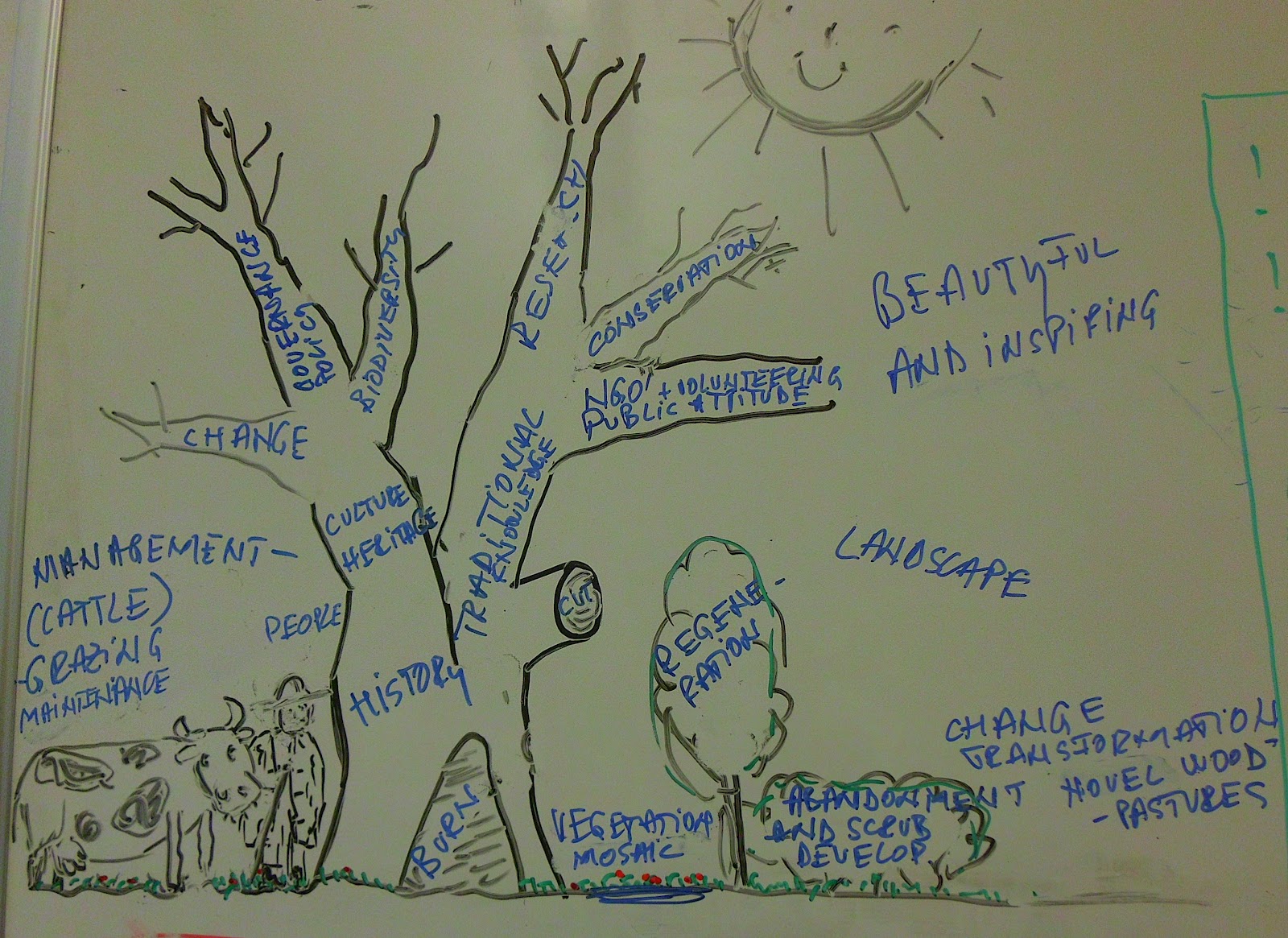
Figure 3 presents a short (and subjective) overview of the various issues emerging from the 12 wood-pasture entries of this thematic issue.

Figure 3. Important issues about European wood-pastures which appeared in the 12 entries.

This wood-pasture theme series was a really nice experience – thanks to the many authors. I personally believe that there is a future for wood-pastures in Europe – if we want that future. There are many good things already happening across Europe in this respect. Isolation is not an issue anymore: fast knowledge flow and learning from each other is now possible. We need to amplify and extend them to create the grounds for conservation action.

Tibor Hartel -  Ovidius University Constanta, Romania; Leuphana University, Lüneburg, Germany. E-mail: hartel.tibor@gmail.com

Saturday, 4 August 2012

Patterns and processes in pasture woodlands of the Swiss Jura mountains

 Pasture woodland with spruce (Picea abies) 
in the Swiss Jura mountains at 1350 m a.s.l. 
(Combe des Amburnex, Marchairuz VD,  46°31’ N, 6°11’ E)


Many European mountain wooded pasture landscapes are threatened by a dichotomous evolution: tree overgrowth in insufficiently productive zones, which tend to get abandoned by farmers, and loss of trees and shrubs as well as a deficient re-growth in more favourable areas that permit a more intensive use. This is also observed in wooded pastures of the Swiss Jura Mountains. As a consequence, there is a loss of biodiversity and landscape attractiveness. The use of these semi-natural ecosystems is critical since their existence and survival depend on a subtle management equilibrium, which aims at providing various ecological goods and services, including grass and wood production and recreational areas. This question becomes even more important considering the present changes in agricultural practices in mountain regions, as a result of the transformation of this sector of the economy, and also in relation to the climate change issue.

In a large scale survey, one sixth of the Swiss vascular flora (about 3000 species) was observed in the wooded pastures of the Swiss Jura Mountains. Plant biodiversity is also very high at fine scale. The origin of this multi-scale high plant species richness is multiple. First, soil spatial variability is important, ranging from shallow calcareous to deep, acidic and silty soils. Secondly, a complex mosaic of trees, shrubs and open grasslands creates various microclimates favouring different plant species. For example, a species richness optimum at 30% of tree cover has been demonstrated. Thirdly, cattle activities can change plant species composition. Finally, plant species richness is related to topographic complexity described by elevation variability and its spatial configuration. Wooded pastures are therefore a good example of a landscape where high biodiversity can coexist with extensive land use. Many transitional zones and boundaries occurring in a highly heterogeneous and fluctuating environment, including various tree densities, create optimal conditions for biodiversity.

Pasture woodland with beech (Fagus sylvatica)  
in the Swiss Jura mountains  at 1200 m a.s.l. 
(Métairie d’Évilard, Orvin BE, 47°09’ N, 7°10’ E) 
Livestock activity is an important factor in structuring vegetation in silvopastoral ecosystems. Large herbivores may influence vegetation in three ways: (1) herbage removal and tree-shrub browsing, (2) trampling, (3) dung and urine deposition. Differences in spatial distribution of cattle effects at the landscape level may have important ecosystem implications. In particular, the spatial segregation of feeding and excretion should lead to a transfer of nutrients from feeding places to resting places, with trampling effects concentrated in intermediate situations such as along paths. At fine scale, pastured areas can be considered as a patchwork of various levels of disturbances (trampling and grazing) and resources (nutrients from dung and urine), which can change from year to year. Thus, herbaceous plant communities undergo change in resource availability and disturbance regime at various temporal and spatial scales, leading to a sort of shifting mosaic of species and plant communities. These observations explain the coexistence of a high number of species in these grasslands.
Trees are key organisms in silvopastoral ecosystems and interactions with cattle and herbaceous vegetation are critical to understand patterns and processes in these highly heterogeneous landscapes. The regeneration of trees is also crucial for the long-term sustainability of wooded pastures. In the wooded pastures of the Swiss Jura Mountains, one conifer species (Picea abies L.) and two deciduous species (Acer pseudoplatanus L. and Fagus sylvatica L.) can dominate, Picea being the most abundant. Their different life stages show various sensitivities with respect to cattle activities.

In wooded pastures, spatio-temporal scales are critical. Three spatial scales seem to be important. At large scale, the human (e.g., fences, water points) and natural (e.g., slope, openness) landscape structures of the paddock will induce the first general patterns of cattle activity. At medium scale (few square meters), among plant communities, cattle choose communities with the best forage availability. At fine scale, within a given plant community, cattle avoid dung pats and unpalatable plants. Each entity or process considered in a silvopastoral ecosystem has a characteristic spatial and temporal scale and processes occurring at a certain scale may impact on entities at another scale. For example, a cattle foraging behaviour of few minutes can have an impact during decades on the tree pattern, or, as an example of what can happen at a higher integration level, some political decision in relation to agriculture policy can have a long-lasting effect on the entire landscape. The integration of all these spatial and temporal scales has to be taken into account for sustainable management. The complex interactions between cattle activities, vegetation and landscape structure, shifting mosaic in the herb layer and tree regeneration can be modelled in a spatially explicit mosaic compartment model of the dynamics of silvopastoral ecosystems which then can be used as a decision tool in management projects.

Considering the high cultural, socio-economic, ecological and landscape values of these ecosystems, there is an increasing need to develop conservation tools. Integrated management planning of wooded pastures requires an intensive collaboration between agronomists, foresters, ecologists and socio-economists. The ecological work has been extended in this direction in the framework of the French-Swiss cross border program Interreg IIIA and in some other important projects such as MOUNTLAND of the Competence Center Environment and Sustainability of the ETH-Domain.

References

Barbezat, V., Boquet, J.-F. (Eds.) 2008. Gestion intégrée des  paysages sylvo-pastoraux de l'Arc jurassien – Manuel (Handbook). Conférence  TransJurassienne, La Chaux-de-Fonds, Besançon. 160 p et 1 CD-ROM (Programme Interreg IIIA).
Buttler, A., Kohler, F., Gillet, F. 2009. The Swiss mountain wooded pastures: patterns and processes. In : Agroforestry in Europe, Current Status and Future Prospects, Eds A. Rigueiro-Rodrigues et al. Springer Science, Advances in Agroforestry  vol. 6 : 377-396, 450 p. ISBN 978-1402082719.
Gallandat, J.-D., Gillet, F., Havlicek, E., Perrenoud, A. 1995. Pâtubois: typologie et systémique phyto-écologiques des pâturages boisés du Jura suisse. Laboratoire d'écologie végétale, Université de Neuchâtel, Neuchâtel, Suisse.
Gillet F., 2008. Modelling vegetation dynamics in heterogeneous pasture-woodland landscapes. Ecological Modelling 217 (1-2), 1-18.
MOUNTLAND Sustainable land-use practices in mountain regions: Integrative analysis of ecosystem dynamics under global change, socio-economic impacts and policy implications. CCES-Competence Center Environment and Sustainability (http://www.cces.ethz.ch/projects/sulu/MOUNTLAND).


Professeur Alexandre Buttler

Laboratoire des Systèmes écologiques - ECOS
Ecole polytechnique fédérale de Lausanne (EPFL),
School of Architecture, Civil and Environmental Engineering (ENAC),
and Institut fédéral de recherches WSL, Site de Lausanne
Station 2
CH - 1015 Lausanne (Switzerland)
E-Mail: alexandre.buttler@epfl.ch
Web page : http://ecos.epfl.ch/page-7569-en.html

Thursday, 2 August 2012

Do wood-pastures still occur in the Czech Republic?

Fig. 1. Grazing in Romanian Banat near the 
Czech village Svatá Helena. Grazed orchards
 (in the foreground) are important habitats similar
 to the wood-pastures (in the background).

Wood pastures were formerly common in the Czech Republic. They are depicted on old cadastral maps, and they can also be seen on old paintings. We can find plenty examples of park-like habitats across our country when looking just on the pre-war aerial photographs. Nowadays we can hardly find any wood-pasture in which management persisted. Indeed, probably all the old pastures were infilled by either planted or naturally established trees. Therefore, we can simply conclude that the ancient wood-pastures disappeared in the modern history. However, traditional form of pastoralism is still practised by small community of Czechs that live in several small villages in multi-ethnical region of Romanian Banat. These people settled in the region in the middle of 19th century, and transformed the forests to arable land, pastures and meadows in order to use the land in a similar manner as in Bohemia.  They have kept their language, and they have still kept also many of old traditions and farming methods. Therefore, the landscape there resembles the former landscape in the Czech Republic.
How do the pastures in Banat look like? The most important thing is that there is no sharp boundary between forests and pastures. Most of the pastures are wooded, but there are no large trees (fig 1). There are only shrubby beeches and hornbeams and frequently there are only relatively short-living shrubs (e.g. hawthorns). The wood-pastures in Banat do not correspond to the romantic idea of wood pastures as pasturelands with large old trees. Instead, most of them are rather „shrub-pastures“. However, these habitats are still unusually species rich and feature high spatial variability.
Fig. 2. Park-like landscape of Doupovské hory
Experienced this we are able to see similar habitats also in the Czech Republic. They are not particularly common but they occur in Central Bohemia (Bohemian Karst), Western and Northern Bohemia and Southern Moravia. The origin of these shrubby pastures is diverse. Probably most of them are pastures that were abandoned for some decades. They have been partly overgrown by shrubs, and the grazing has been introduced again, sometimes as tool of conservation. Some of them are pastures on formerly arable land which was abandoned some decades ago and are currently used for grazing.
A special case of the new wood-pastures represent park-like habitats in abandoned landscape of Doupovské hory. The cultural landscape of Doupovské hory was abandoned when large military area was established there in 1952. After several decades of succession the landscape inside the military area resembles the wood-pastures very strongly (fig. 2, fig. 3), and it is also very species rich. The landscape there is significantly influenced by grazing of wild herbivores, such as Red deer, Sika Deer, wild pigs.
Fig. 3. The fate of wood-pastures in Doupovské hory.
The former wood-pastures often changed
to dense forests while the former tree-less landscape changed
 to shrublands grazed by wild herbivores.
New wood-pastures grazed either by cattle or by wild animals could be very valuable for nature conservation but could be also endangered by conservation itself. For example, farmers were motivated by Czech legislative to eliminate shrubs and solitary trees from their pastures to obtain subsidies. Fortunately, this was changed in 2010.
However, conservation management is often planned without considering the value of scattered shrubs. The problem is that there is little information on the species richness and variability of new wood-pastures. Particularly the effects of interactions between shrubs and grazing on the small scale vegetation variability are often overlooked. Therefore, we have started several small projects which aim to i) investigate the relationships between shrub cover, grazing intensity, and species diversity (both alpha and beta diversity), ii) compare the diversity of traditional wood-pastures in Banat and new wood-pastures in the Czech Republic and iii) investigate the role of wild animals in forming and maintaining the abandoned landscape.

Jaroslav Vojta

Monday, 23 July 2012

Wood-pastures from Southern Transylvania, Romania


Although wood-pastures are cultural and natural landscape elements of international importance, virtually nothing is known about their status and distribution in Eastern Europe in the wider conservation community. 
Figure 1. Ancient wood-pasture
in 
Southern Transylvania
.
Although Romania is potentially rich in wood-pastures, only those from Southern (Saxon) Transylvania benefited of habitat surveys. Wood-pastures from Southern Transylvania were formed by the Saxon ethnic group through rearing the forests and grazing them with pigs, cattle, sheep and from the 18th century, buffalo. Each Saxon village had historically at least one wood-pasture in its vicinity. Wood-pastures from Southern Transylvania are dominated by oak (Quercus robur, Q. petraea), and occasionally by beech (Fagus sylvatica) and hornbeam (Carpinus betulus).
Wood-pastures from Southern Transylvania are excellent systems for those interested in historical ecology, the history of nature resource governance, the dynamic of traditional social-ecological systems, and for ecologists (Akeroyd 2003, Hartel and Moga 2010).

The Saxon area of Transylvania has a long history of forest grazing. Saxons were allowed to manage their forests by the very beginning of their arrival in Transylvania, by a document commonly referred as ‘Andreanum’ (The Golden Charter of Transylvanian Saxons, 1224). Forest management at those times included also grazing in forests. A document originating in the 16th century showed that Transylvanian Saxons asked István Báthory (the Prince of Transylvania and the King of Poland, the Grand Duke of Lithuania) to empower local authorities to control grazing with sheep and pigs in the oak forests in their territory (Tescula and Gota 2007, Hartel and Moga 2010).
In bigger towns like Sighisoara and Medias, wood-pastures were also increasingly used for cultural events from the end of the 19th century.

Figure 2. Cultural event on the Breite wood-pasture: Skopationsfest,
sometime in the early 20th century
 (source of the picture: 
http://www.rezervatia-breite.ro/origine-si-istorie).
The cultural-traditional relationships between people and wood-pastures sharply changed in the 20th century after the establishment of the communist regime. Many big, old trees were cut in this period. Old Saxons from Sighisoara relate that the trees from the Breite wood-pasture were so large that cutting them was impossible: explosives were used to remove then, and they were pulled out with heavy machinery.
Changes didn’t stop with the collapse of the communism in 1989. From an ethnic-social perspective, a significant change was the massive exodus of Saxons from Transylvania. With the collapse of the traditional Saxon institutions, the traditional links between wood-pastures and their forming and maintaining culture were broken. The grazing regime also changed in the Saxon area of Transylvania: a massive reduction occurred in the number of cows along with an almost complete disappearance of buffalos, due to social and institutional changes. This reduction in grazing triggered the development of shrubs and the forest regeneration in wood-pastures. Many large oaks were overgrown and killed by regenerating hornbeam.

Figure 3. Hornbeam development in an
 ancient wood-pasture where grazing was stopped.
Since 2007 European Union agri-environment payments have been available, and farmers are using this opportunity. They clean the shrubs from wood-pastures and start to use them again. Evidence of shrub clearance was noticed in 10 out of 42 wood-pastures inventoried in 2012. Because financial incentives continue to favour sheep grazing, the number of sheep has dramatically increased in these landscapes in recent years. The frequency of uncontrolled pasture burning is also showing an increasing tendency. Many people believe that the agri-environment payment system indirectly contributes to the increase of pasture burning, although such burning is illegal. Pasture burnings appear to contribute to the dramatic decline of old, veteran trees. In 2012, more than 40 veteran trees (with trunk circumference of more than 4 meters) were burned in this way, while most of the 155 oaks with more than 4.7 meter trunk circumference inventoried in 2009 and 2010 bear the signs of burning in the past. Old, dying veteran trees are more likely to be injured by people than the young trees. People often cut ancient trees to use them as firewood in winter, while other trees are burned deliberately. A number of old trees collapse due to natural causes (such as lightening and drought). The sharp degradation and disappearance of ancient trees requires the urgent implementation of conservation measures designed to protect them.

Figure 4. One of the many ancient trees burned 
in a wood-pasture near Sighisoara (spring, 2012). 
The fire was extinguished by a fireman.

Even with the above dramatic picture about the Transylvanian wood-pastures, we have reasons to believe that the next decades will catch the Saxon region of Transylvania with wood-pastures and ancient trees – and their degradation will be stopped. First, evidence about the distribution, status and ecological value of wood-pastures is increasing. Second, nature conservation, ecological education and cultural tourism initiatives are increasing in the region – ancient wood-pastures can be an important component of these initiatives. In this respect successful initiatives were the ‘Find the oldest tree’ and the ‘Oak day’ of the Mihai Eminescu Trust with tens of schools involved and wide media coverage. One of us (TH) give lectures in 17 schools for local communities about the ecological and cultural value of the scattered and ancient trees in 2012. Third, there are many organizations interested in nature and cultural heritage conservation. Fourth, the international visibility of the wood-pastures and the region as a whole is increasing. The region tends to be attractive not only to high profile research teams from Western Europe but also to non-academics interested in nature. In combination, these various activities appear to be creating fertile ground for establishing new links between wood-pastures and people – to the benefit of both.

Figure 5. The biggest known living oak from
Southern Transylvania (in the village Mercheasa)
and the kids who find it:
 Dana Pelei and Sebastian Pelei (
General School, Rupea)
– the winners of the competition ‘Find the oldest tree’.
The oak have 930 cm circumference.
References
Akeroyd J. 2003. A Transylvanian wood-pasture. Plant Talk 34: 34-37.
Hartel T., Moga C.I. 2010. Good practice management of wood-pasture habitats. Mihai Eminescu Trust. (in Romanian)
Tescula N., Gota A. 2007. The history of the Breite wood-pasture. In: The management plan of the Breite wood-pasture reserve. (in Romanian)

Authors
Tibor Hartel – Mihai Eminescu Trust, Sighisoara, Romania; Leuphana University, Lüneburg, Germany
 Ine Doresteijn - Leuphana University, Lüneburg, Germany. E-mail: ine.dorresteijn@gmail.com
Anne-Catherine Klein - 7 rue du trèfle Wintzenheim France. E-mail: 4iklein@gmail.com
Cosmin Ioan Moga – Ecotransilvania Association, Sighisoara, Romania. E-mail: cosmin.moga@gmail.com  
Árpád Szapanyos – Ecotransilvania Association, Sighisoara, Romania. E-mail: picos_a@yahoo.com
Marlene Röllig – Leuphana University, Lüneburg, Germany. E-mail: roellig@uni.leuphana.de
Kinga Öllerer – Institute of Biology, Romanian Academy, Bucharest, Romania. E-mail: kinga.ollerer@gmail.com
Joern Fischer – Leuphana University, Lüneburg, Germany. E-mail: joern.fischer@uni.leuphana.de

Tuesday, 26 June 2012

Wood-pastures in Hungary – the herders’ perspective


The influence of old and active woodland grazing by domestic livestock in wood pastures is an important element of the traditional landscape of the Carpathian Basin. Following several landscape-history studies, this fact became recently known among Hungarian ecologists. One of the reasons why „the grazing in wood by livestock” has got in the focus of researchers in this area is that in Hungary nearly all the wood pastures are abandoned or becoming abandoned, leading to major traditional knowledge and biodiversity loss without having just a few information about this habitat type. Our aim to get understand and discover the history and methods of woodpasturing and the effect of woodpasturing to the biodiversity by interdisciplinary methods (landscape history, vegetation, zoology and traditional ecological knowledge research). We work in different regions of Hungary and in Szeklerland in Transylvania in Romania, where traditional land use is still maintained at several places, and therefore these areas could have major importance in understanding natural and cultural functions of wood-pastures.
A typical wood-pasture  between 19-21th 

century. The picture was took by Ferenc Sándor
 in 1960-1970.*


Wood-pasture is a habitat type which does not only depend on the natural environment, but on human-related activities, too. Regulations, economy, livestock type all affect this habitat and most importantly the man himself, who works there day after day. The change of these factors identifies the concept, the definition and the managment of the wood-pastures. After the Enlightenment in Hungary the main changes were in the 18-19th century: the forest- and pastureland seperation; in the first half of 20th century: forestry law and the industralization, in the second half of 20th century: the socialization and after the privatization.

Cserépfalu wood-pasture managed by
Bükk National Park, grazed by Hungarian grey cattle.
And now we are in the beginning of the 21th century… and most of the Hungarian wood-pastures from 5500 ha were abandoned. These were mapped by Hungarian Vegetation Survey (Bölöni et al. 2008). Today wood-pastures managed by national parks (rangers), a few enthaustic farmers and herders.  
To understand recent situation of the Hungarian wood-pastures we carried out open and semi-structured interviews with herders-farmers and rangers (working in nature conservation) in Hungary, together with participant observation. Herders'  and  rangers'  gave  diverse  and sometimes very different definitions and answers, in spite of the fact that the fundamental aim is the long-distance maintenance of the pasture for everybody. 
Year by year less and less traditonaly herder
works on wood-pastures. He is one of them,
who was born in a herder family and still work.


But we can understand much more easily if we look the different values attributed by rangers and herders. The most important value of a wood-pasture for rangers is related to the landscape and biodiversity, and for herders to pasturing and feeding the livestock. For me one of the most interesting data was, thet the herders do not entitle an area as a wood pasture, what professional conservation managers would call a wood pasture, they simply call it: pasture. For the herders, coming from traditional herder families „the trees on the pastureland” is not a separate habitat. „The trees on the pastureland” is natural, continuous and essential.  They  see and use the landscape as a whole system.  In practice of the traditional pasturing system this means the animals graze all over the boundary of the village (with the herder considering the forcoming season and weather). At the same time the usage of a wood-pasture means a micro-scale view too (for example: conscious tree and shrub selection).

In order to improve the conservation of wood-pastures it is essential to view this habitat type through the managers eyes, and the best we can do is joining them to pasture at least for one day…

Anna Varga

varga.anna@gmail.com
University of Pécs
Institute of Biology, Department of Plant Systematics and Geobotany ,
Pécs, Ifjúság útja 6., H-7624, Hungary,


 Literarture
Bölöni, J., Molnár, Zs., Biró, M. & Horváth, F. (2008): Distribution of the (semi-) natural habitats in Hungary II. Woodlands and shrublands. Acta Botanica Hungarica 50 (Suppl.), pp.107–148

*(To the first picture) After forest and pastureland seperation (1862) the regular grazing and clearing of the area is controlled by the community of the farmers of  Olaszfalu and the area called “Olaszfalui Volt Úrbéres Gazdák Legelője”. In the beginning of the 1950s, there was regular grazing and cleaning in the area, and there was 10% woodland (Fagus sylvatica, Quecus cerris, Pyrus pyraster, Carpinus betulus, Acer campestre).  Since the establishment of the soviet co-operative in the 1960s, the number of animals started to decrease, consequently the regular  maintenance and clearing of the pasture ceased. In the last few years the former pasture was utilized as a  hunting ground. In 2007 the territory has been divided into parcels. With the filling up of parkland stands today 52% of the area consists of closed woodland. 17% of the woodland is older than 50 years, 38% is between 30 and 40, while 45% is between 10 and 20 years.

Monday, 18 June 2012

Agroforestry in Germany today


The Borkener Paradies wood-pasture
grazing reserve in Lower Saxony
 

Compared to many other European landscapes such as on the Iberian Peninsula, the Abruzz and Apennine Mountains in Italy and especially in many eastern and southeastern European countries, agroforestry in Germany today is of peripheral significance. There are two systems that can still be addressed: wood-pastures and with them semi-open pastureland and traditional orchards - the so-called central European savannas. There are three important points to make about these systems: one aspect is the historical and cultural importance, secondly their ecological significance as outstanding and unique habitats and thirdly there is interest in the remaining systems from a conceptual perspective as possible options for low intensity agricultural systems in less favored areas. The oldest systems are wood-pastures which probably mirror the onset of European agricultural history.

Wood-pasture in Bavaria
Today, wood-pastures belong to the rarest elements in Central European cultural landscape heritage. In general, remnants of wood-pastures are still to be found only in some lowland reserves and in mountain areas where, because of site conditions, the intensification processes in agriculture had natural limitations. Depending on the geographical region and individual structural characteristics, wood-pastures, and with them the generally associated semi-open pastureland, are known under various terms in Germany such as: Allmendweiden, Baumweiden, Harte/Hardte, Hutungen, Krattwälder, Maisalmen, Ötzen, Schachen, Tratten, Weidewälder, Weidfelder, Wyttweide.

Wood-pasture in the Black Forest 
In recent years new research interest has been given to agroforestry. But it seems though that the original definition – making use of the product of the trees (wood, fruits, leaves) and of the understory (cropping, grazing, green fodder) at the same space – is not valid any longer. Looking at papers you see that even systems such as short-rotation-coppices or alley-cropping systems are considered as to be agroforestry.

Rainer Luick

University of Rottenburg Schadenweilderhof 72108 Rottenburg
E-mail address: luick@hs-rottenburg.de